

Choosing the right cover for your outdoor space comes down to how you live, your budget, and the look you want. Two options dominate Australian backyards: shade sails and pergolas. Both block the sun and extend your usable space, but they suit different needs.
If you have compared shade sails in Sydney with fixed structures, you have probably noticed the price gap first. That gap tells part of the story, though not all of it. Each option carries trade-offs in cost, installation, appearance, and lifespan.
Homeowners weighing shade sails in Sydney against a pergola should think about the space itself. A small courtyard, a large deck, and a poolside area each favour a different solution. This guide breaks down the main points so you can decide with confidence.
Cost Comparison
Shade sails cost less upfront. A tensioned fabric sail with anchor points suits most budgets and covers a wide area for the price.
Pergolas cost more. You pay for timber or aluminium framing, roofing material, and often council approval. Expect a higher outlay, especially for a fixed roof or louvred system.
Quick summary: Shade sails win on price. Pergolas ask for a larger investment but add fixed structure.
Installation and Approval
Shade sails install quickly. Fixing points attach to posts, walls, or existing structures, and a straightforward job can finish in a day. Smaller sails may not need council approval, though larger installations sometimes do.
Pergolas take longer. They involve footings, framing, and roofing, and most require a development application depending on size and location. Check your local council rules before you start.
Quick summary: Sails are faster and simpler. Pergolas demand more time and paperwork.
Aesthetics and Style
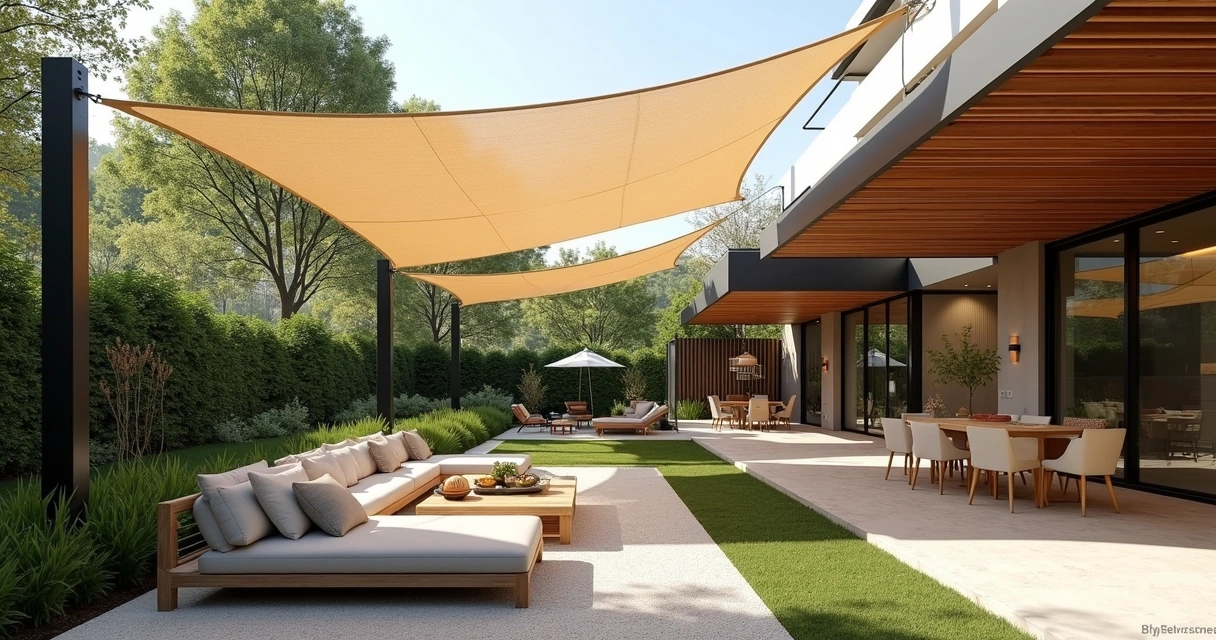
Shade sails give a modern, angular look. You can layer several sails at different heights for a striking effect, and colour choices are wide.
Pergolas offer a solid, architectural feel. Timber suits traditional homes, while aluminium and louvred roofs match contemporary designs. A pergola reads as a permanent extension of the house.
Quick summary: Sails feel light and modern. Pergolas feel grounded and built-in.
Durability in Australian Conditions
Shade fabric handles strong UV well, but it wears over time. Quality sails last around 10 to 15 years before the fabric needs replacing. Remove them ahead of severe storms to protect the fixings.
Pergolas stand firm through wind and rain. A well-built frame lasts decades with minimal upkeep, and a solid roof keeps the space dry year round.
Quick summary: Pergolas last longer and cope better with weather. Sails need replacement sooner.
Which Suits Your Space?
- Small courtyards: A single sail delivers quick, affordable shade.
- Poolside areas: Sails cast cooling cover without blocking the breeze.
- Entertaining zones: A pergola offers all-weather comfort and lighting options.
- Rental or short-term homes: Sails cost less and come down easily.
Pick a shade sail for fast, budget-friendly cover and a modern look. Pick a pergola for a permanent, weatherproof structure that lifts your home’s value. Match your choice to your space, your climate, and how often you plan to use it. Which one fits your backyard best?